
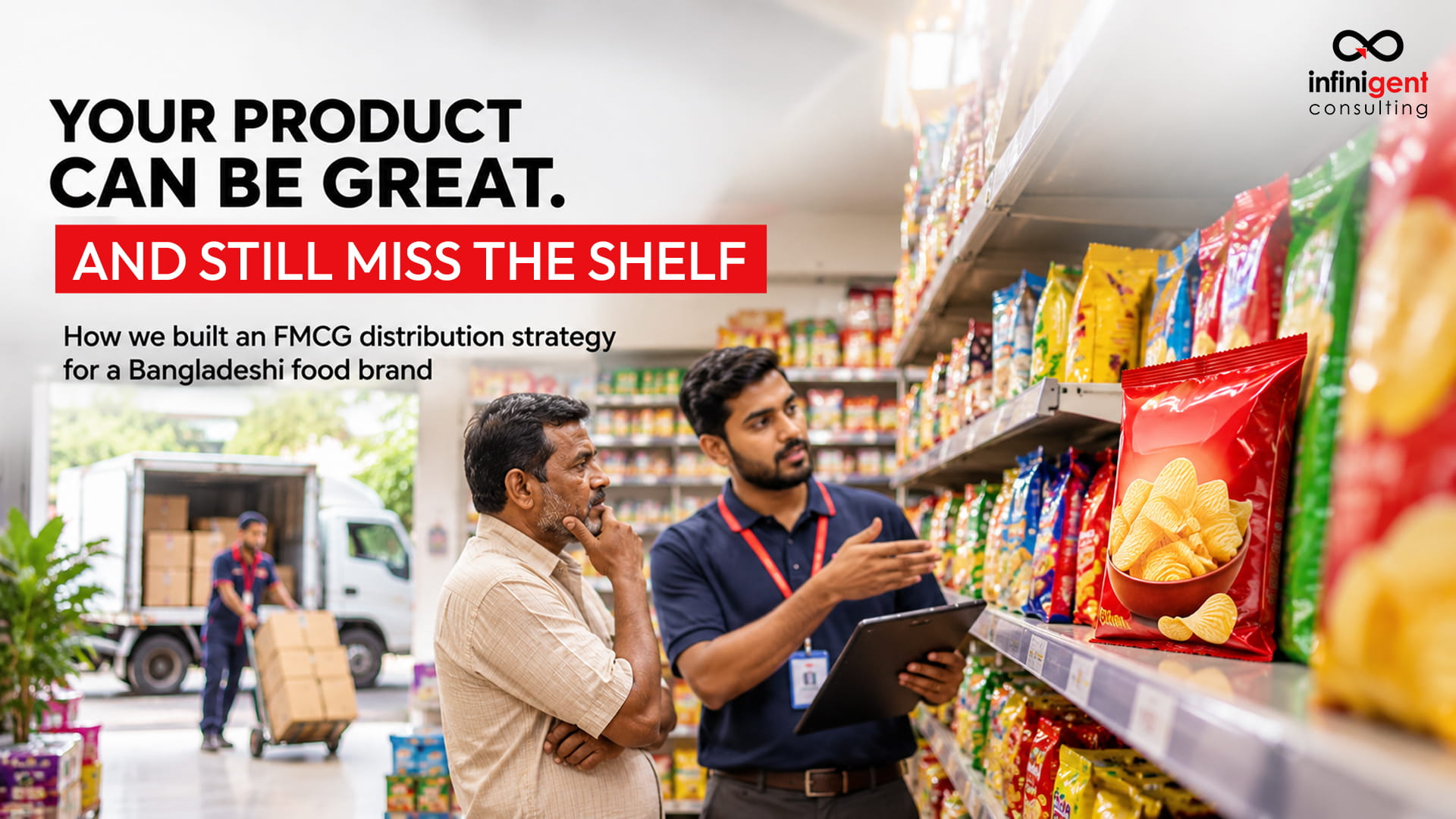
You can make a great packaged food product and still lose the shelf. The reason is rarely the taste or the price. It is usually that the product never reaches the shop in time, in good condition, or at the right margin for the retailer.
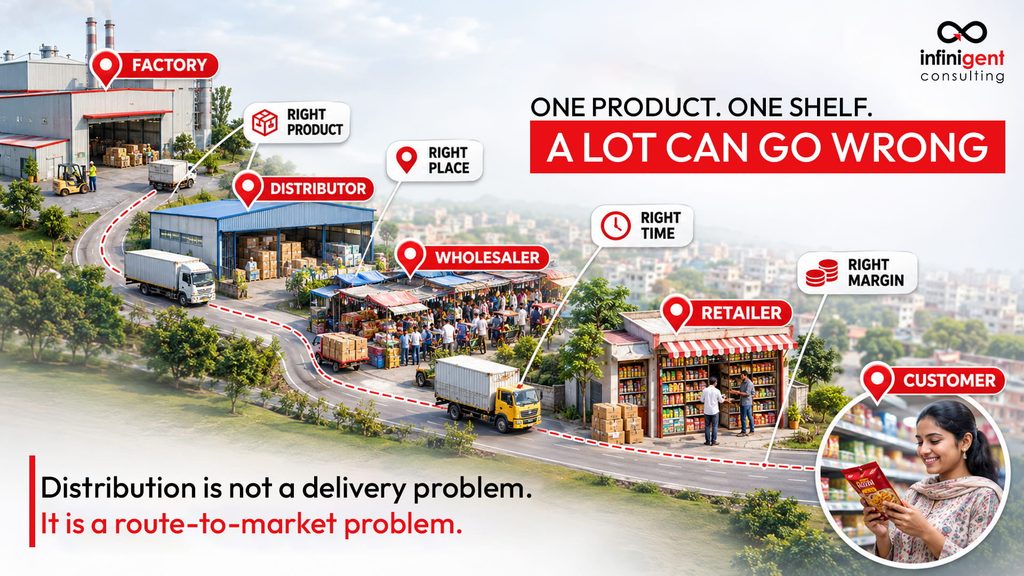
This is where many Bangladeshi food brands get stuck. A sound FMCG distribution strategy in Bangladesh has to work for Dhaka’s crowded wholesale markets and for a small retailer in a remote upazila. Recently, a local food company asked us to help build one. This is how we approached it, what we found, and what the company now has.
The Client and the Dilemma
Our client is a local packaged food company. It had a good product range and wanted to grow beyond the markets it already served. It needed a nationwide distribution structure, but it did not yet have a clear route to market.
They came to us with three open questions:
- How should the company reach every region of Bangladesh efficiently?
- What infrastructure would that network need?
- What should happen to defective products and market returns?
What Was at Stake
In FMCG, distribution is a big part of whether a brand succeeds. Without a clear structure, a company risks:
- Patchy market coverage, with strong sales in some areas and none in others
- Distributors who are poorly matched to the territory or the product
- Rising costs from stock that is damaged, expired, or sent back
- Losing shelf space to competitors who are already in place
Discovery: Asking the Right Questions First
We did not start with a model. We started with questions. Before suggesting any structure, we wanted to understand the product, the market, and the competition.
Questions we worked through with the team:
- Which products sell where, and at what price points?
- Which trade channels matter most for this category?
- How large is the market potential in each region?
- Who are the competitors, and how strong is their presence?
- Are there alternative routes to market beyond the traditional distributor model?
What We Uncovered
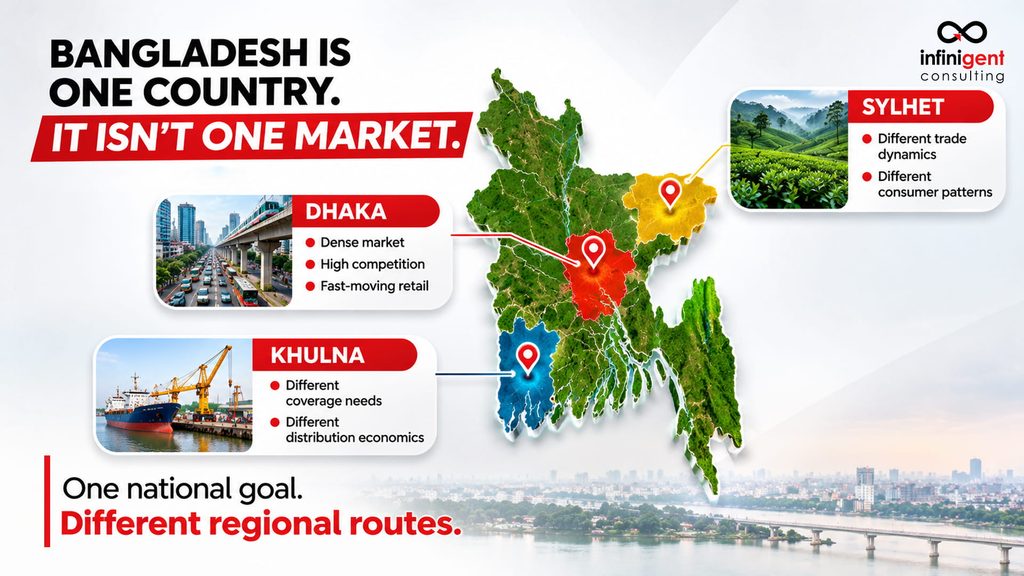
Bangladesh is not one market. Geography, population density, buying habits, and trade practices differ from region to region. A single, uniform distribution model was never going to fit. The opportunity is large, too: industry insiders estimate the FMCG market at around $4 billion a year, and much of the reach challenge sits in rural areas. A UNCDF study of micro-merchants describes how FMCG supply chains in Bangladesh reach small, mostly rural retailers.
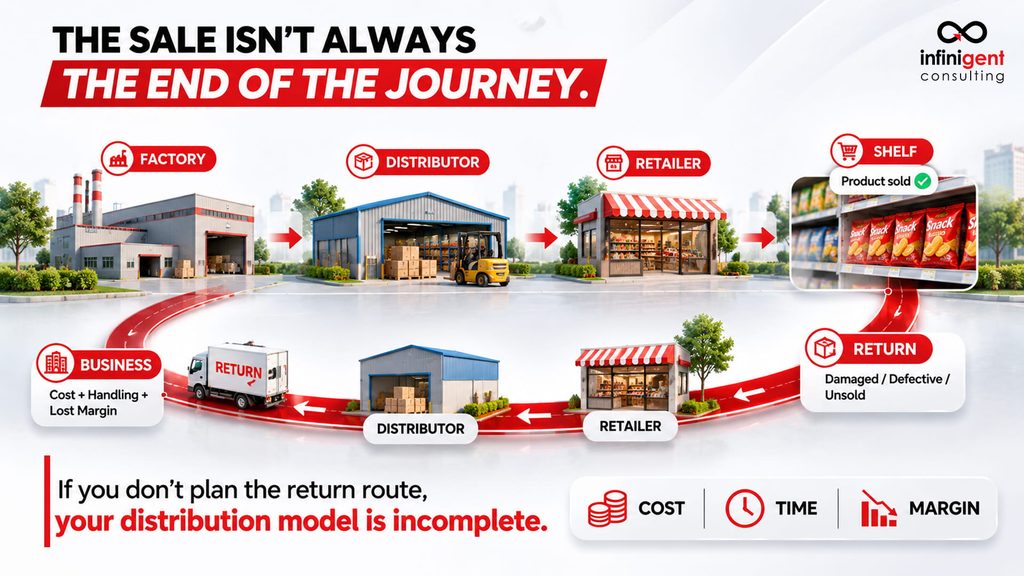
We also found that returns management had not been planned for. Defective products and market returns were an open issue. If you do not plan for them, they eat into margins and strain relationships with distributors and retailers. This is why distribution planning needs to connect with supply chain planning from the start.
Our Action Plan
After the research, we built the strategy around four areas:
- Route-to-market strategy: We analysed the products, trade channels, pricing, and alternative distribution routes to find the best path from factory to shelf.
- Distribution infrastructure: We looked at market size, geographical spread, and competitor presence to design the network itself.
- FMCG distribution model: We built a structure that follows how packaged food is actually traded in Bangladesh.
- Returns management: We designed clear strategies for handling defective products and market returns.
How We Put It Into Practice
We ran detailed market research and commercial analysis to understand distribution needs across the country. Those findings shaped the final framework, covering market coverage, infrastructure, channel selection, and day-to-day operations.
If you are weighing a similar decision, our management consulting services show how we run this kind of research-led project.
Roadblocks and How We Handled Them
A project like this never goes in a straight line. A few challenges came up, and they will sound familiar to anyone in FMCG here.
- Regional differences: One structure could not serve every region. We shaped the framework around each region’s market potential and trade practices.
- Competitor strength: In some areas, established competitors already held strong positions. We took this into account when designing the network and choosing channels.
- The returns question: It was easy to treat this as a later problem. We brought it into the design early so it would not hurt margins down the line.
The Results
The engagement gave the client a clear, practical distribution framework:
- A complete pan-Bangladesh distribution structure built around the company’s products
- A clearer route-to-market and infrastructure plan
- Defined strategies for product defects and returns
- A stronger foundation for market penetration, operational effectiveness, and sustainable growth
In the short term, the company moved from open questions to a structured plan. In the long term, it has a market-aligned model that supports efficient nationwide distribution and its wider business goals.
Here is what the client told us:
“Infinigent’s research-led approach gave us a distribution structure built around our products and the realities of the Bangladesh market. It has given us a much stronger foundation to grow our reach across the country.”
Want to see more projects like this? Browse our other case studies.
Key Takeaways for Your Business
If you are planning to expand your reach in Bangladesh, three lessons from this project apply:
- Start with the market, not the model. Look at your products, pricing, channels, and competitors before deciding how to distribute.
- Plan for regional differences. What works in Dhaka may not work in Sylhet or Khulna. Build flexibility into your structure.
- Plan for returns from day one. Handling defective stock and returns early protects your margins and your trade relationships.
Ready to Build Your Distribution Network?
If you are a Bangladeshi business owner or decision-maker planning to expand, we would be glad to talk. In a free strategy call, we can look at your products and markets and discuss what a distribution framework could look like for you.